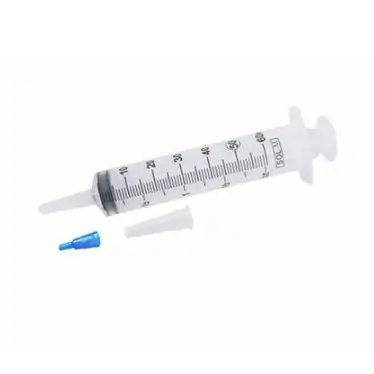
Among the various tip designs available across syringe products, the catheter tip syringe serves a distinct purpose reflected in its specific tapered shape. Understanding what defines this design and how it differs from standard syringe tips helps clarify its appropriate role in clinical practice.
The Distinctive Tapered Tip Design
Unlike standard luer tips designed to accept a needle, a catheter tip features a longer, gradually tapering shape specifically engineered to fit securely into catheters, feeding tubes, and similar medical devices without requiring a needle attachment at all.
Why This Design Excludes Needle Compatibility
Since the catheter tip’s entire purpose centers on direct connection to catheters and tubes rather than injection through a needle, these syringes are intentionally designed without needle-compatible fittings, distinguishing them clearly from luer lock or luer slip designs meant for needle attachment.
Common Capacity Sizes for Catheter Tip Syringes
Catheter tip syringes are commonly available in larger capacity sizes, often 30 to 60 milliliters, reflecting their typical use in applications like irrigation or feeding where larger fluid volumes need to be delivered or withdrawn compared to standard injection syringes.
Material Construction Considerations
Like most modern disposable syringes, catheter tip designs are typically manufactured from medical-grade plastic, offering the combination of cost-effectiveness and disposability appropriate for the single-use nature of most catheter tip syringe applications.
Ensuring Secure Connection to Target Devices
The gradual taper of the catheter tip design is engineered to create a secure friction fit against the specific dimensions of common catheter and tube openings, though users should confirm compatibility with the specific device being connected rather than assuming universal fit across all catheter and tube types.
See also: AHK-Cu After the 2026 Crackdown: A Guide to Who’s Left, and Why It Matters Where You Get It
Learning More About This Specialized Design
For a more detailed exploration of catheter tip syringe design characteristics and specifications, reviewing information on the catheter tip syringe helps clarify how this specialized tip shape supports its intended clinical applications.
Distinguishing From Similar-Looking Alternatives
Given that several syringe tip designs share some superficial visual similarity, confirming the specific catheter tip design before use helps avoid confusion with other tip styles that might not provide the secure connection this specific application requires.
Frequently Asked Questions
Can a catheter tip syringe accept a standard needle attachment? No, catheter tip syringes are intentionally designed without needle-compatible fittings, since their entire purpose centers on direct connection to catheters and tubes rather than needle-based injection.
What capacity sizes are typically available for catheter tip syringes? These syringes are commonly available in larger capacity sizes, often 30 to 60 milliliters, reflecting their typical use in applications requiring larger fluid volumes like irrigation or feeding.
Does the catheter tip design fit all types of catheters and tubes universally? Users should confirm compatibility with the specific device being connected rather than assuming universal fit, since different catheter and tube types may have varying opening dimensions.
Final Thoughts
Understanding the distinctive tapered design of the catheter tip syringe, along with its intentional exclusion of needle compatibility, helps clarify its specific role among the broader range of available syringe tip designs. This design knowledge supports appropriate selection for applications requiring direct catheter or tube connection.
